


Does a Fiber Laser Metal Cutting Machine Improve Modern Metal Fabrication
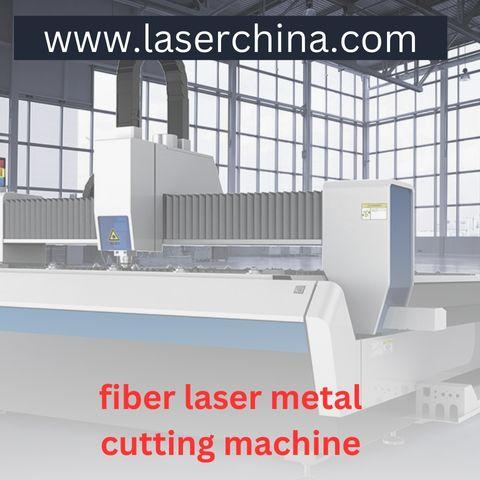
Metal fabrication requires accuracy, speed, consistency, and the ability to handle different materials and thicknesses. As manufacturers look for more efficient production methods, laser cutting technology has become an important part of modern workshops and industrial operations. A fiber laser metal cutting machine uses a concentrated laser beam to cut metal with controlled heat and high precision, making it suitable for a wide range of fabrication applications.
From stainless steel and carbon steel to aluminum, brass, and other reflective metals, fiber laser systems can support demanding cutting work across different industries. Their combination of automated movement, focused laser energy, and computer-controlled operation allows manufacturers to produce detailed parts while maintaining consistent cutting quality.
Understanding Fiber Laser Metal Cutting Technology
A fiber laser cutting system generates its laser beam through an optical fiber rather than using the traditional gas-based laser generation methods found in older systems. The generated beam is directed toward the cutting head, where it is focused onto the surface of the metal.
The concentrated energy heats and melts the material along a programmed cutting path. Assist gases such as oxygen, nitrogen, or compressed air can then help remove molten material from the cutting area. This creates a narrow cut known as a kerf.
The cutting process is controlled by software, allowing operators to import digital drawings and create precise cutting patterns. Once the material, thickness, cutting parameters, and design have been established, the machine can follow the programmed path automatically.
Materials Suitable for Fiber Laser Cutting
A major reason manufacturers consider a fiber laser metal cutting machine is its ability to process several commonly used metals. Stainless steel is frequently cut for equipment, kitchen products, architectural components, and industrial parts.
Carbon steel is another widely processed material and can be used for brackets, frames, machinery components, structural parts, and general fabrication. Aluminum can also be processed when suitable laser settings and assist-gas conditions are selected.
Fiber laser technology is particularly useful for reflective metals because the wavelength produced by fiber lasers is well suited to many metal-cutting applications. However, the appropriate machine power and cutting configuration depend on the specific material and thickness being processed.
Precision for Detailed Metal Parts
Modern manufacturing often requires parts with accurate dimensions and complex profiles. A fiber laser system can follow computer-generated cutting paths with a high degree of control.
This makes the technology suitable for producing holes, slots, curves, outlines, and intricate patterns. Instead of manually cutting each component, manufacturers can prepare a digital design and allow the CNC-controlled system to reproduce the required shape.
Precision also becomes important when several components must fit together during assembly. Consistent cutting dimensions can help reduce adjustment work and support more predictable production results.
Cutting Different Metal Thicknesses
The required laser power depends heavily on the thickness and type of material. Lower-power systems may be appropriate for thinner sheets, while higher-power equipment is generally selected for thicker plates and demanding industrial applications.
When choosing a machine, manufacturers should consider their normal material range rather than selecting power based only on maximum advertised capacity. Cutting thickness, material type, production speed, edge requirements, and expected workload should all be considered together.
A properly matched system can provide a practical production solution for both routine sheet-metal work and more demanding fabrication requirements.
Computer-Controlled Production
Automation is an important part of modern laser cutting. A CNC controller coordinates the movement of the cutting head with the programmed design, reducing the need for constant manual guidance.
Operators can prepare multiple cutting patterns and arrange parts on a sheet to make better use of available material. Nesting software can help organize different shapes within the working area while considering cutting paths and spacing.
This approach is useful for workshops producing repeated orders because the same digital design can be used again when the component is required. Production teams can also modify drawings when a customer's dimensions or design requirements change.
Applications Across Different Industries
A fiber laser metal cutting machine can be used in many manufacturing environments. Metalworking companies may use these systems for machine components, brackets, panels, covers, enclosures, and structural parts.
The automotive sector can use precision-cut metal components for vehicle-related manufacturing and equipment. Industrial machinery manufacturers can produce custom parts according to engineering drawings.
In architectural and interior applications, laser cutting can create decorative metal panels, signs, screens, and custom designs. Electrical and electronics manufacturers may also require accurately cut enclosures and mounting components.
Small fabrication workshops can use fiber laser systems for customized orders, while larger manufacturers can integrate them into broader automated production lines.
Improving Workflow in a Fabrication Workshop
Laser cutting does not operate as an isolated process. Its value also comes from how it fits into the overall production workflow.
A typical process begins with creating or receiving a digital drawing. The drawing is then prepared in compatible software, where cutting paths and material layouts can be organized. The operator loads the appropriate metal sheet or plate and selects suitable cutting parameters.
After the cutting program starts, the CNC system moves the cutting head according to the design. Once the parts are cut, they can move to processes such as bending, welding, grinding, painting, or assembly.
This organized workflow can make it easier for manufacturers to handle both standard production and customized fabrication orders.
Choosing the Appropriate Machine Configuration
Selecting a laser cutter requires more than looking at laser power. The working area should match the size of materials normally processed in the workshop. A larger cutting bed can accommodate larger sheets, while a compact system may be more appropriate for facilities with limited space.
Manufacturers should also consider the cutting head, CNC controller, laser source, cooling system, extraction arrangement, and software compatibility.
The expected workload is another important factor. A workshop handling occasional custom projects may have different requirements from a factory operating the machine for extended production shifts.
Before purchasing equipment, it is useful to identify the metals, thicknesses, sheet sizes, cutting patterns, and expected production volume that the machine will regularly handle.
Maintenance and Operating Practices
Regular maintenance contributes to stable laser cutting performance. Operators should keep the cutting area clean and inspect components according to the manufacturer's maintenance schedule.
The cutting nozzle and protective optical components require particular attention because contamination can affect the cutting process. Cooling systems should also be maintained properly to keep operating temperatures within the recommended range.
Laser cutting parameters should be adjusted according to material type and thickness. Using unsuitable settings can affect edge quality, cutting speed, and consumable life.
Operators should also follow the machine manufacturer's safety procedures, including appropriate ventilation, protective equipment, electrical precautions, and controlled access to the cutting area.
Fiber Laser Cutting for Customized Manufacturing
One of the useful aspects of CNC laser cutting is its ability to move between different designs without requiring a completely new mechanical cutting tool for every shape.
This makes the technology suitable for customized products and short production runs. A manufacturer can prepare a new digital drawing and use the same basic cutting system to produce another component.
For businesses serving different customers, this flexibility can support orders involving unique dimensions, logos, patterns, mounting holes, or specialized components.
Building a Modern Metalworking Operation
As manufacturing becomes increasingly digital, laser cutting can connect naturally with CAD/CAM software and other automated equipment. Digital drawings can move through the production process with fewer manual steps, helping workshops organize repeat manufacturing tasks.
A fiber laser metal cutting machine can therefore become part of a larger production environment rather than simply serving as a standalone cutting tool. When combined with appropriate material handling, bending, welding, and finishing equipment, it can support a complete metal fabrication workflow.
Final Thoughts
Fiber laser technology has become an important solution for manufacturers working with metal sheets and plates. Its computer-controlled cutting process can support accurate designs, repeat production, customized components, and a wide range of fabrication applications.
Choosing the right fiber laser metal cutting machine requires careful consideration of material type, thickness, working area, laser power, software, workload, and maintenance requirements. With the appropriate configuration and operating practices, fiber laser cutting can fit into workshops ranging from customized fabrication businesses to large-scale industrial production facilities

 English
 Arabic
 French
 Spanish
 Portuguese
 Deutsch
 Turkish
 Dutch
Dutch
 Italiano
 Romaian
 Portuguese (Brazil)
 Greek
Greek