


Why First-Time Compression Wearers in India Are Often Surprised Most Indian gym-goers are surprised by how different compression wear feels during the first few minutes because the fabric sits continuously against the skin instead of moving freely like co
Why First-Time Compression Wearers in India Are Often Surprised
Most Indian gym-goers are surprised by how different compression wear feels during the first few minutes because the fabric sits continuously against the skin instead of moving freely like conventional workout shorts.
Someone accustomed to loose cotton shorts or relaxed polyester bottoms may initially interpret the close fit as tightness. That sensation does not automatically mean the garment is too small. Properly sized performance compression should feel firm and evenly distributed rather than painful, restrictive, numb, or sharply tight around one particular area.
Indian gym environments make the first impression even more variable. A heavily air-conditioned commercial gym in Bengaluru can make close-fitting performance clothing feel comfortable almost immediately, while a non-AC neighbourhood facility in Chennai during a humid summer afternoon may make the same garment feel noticeably warmer. Personal sweat rate, fabric weight, exercise intensity, and sizing all influence the experience.
First-time users should therefore judge compression differently from ordinary gymwear. The useful question is not whether it feels completely natural from the first minute, but whether the sensation settles as the session progresses and whether the garment remains comfortable through actual training movements.
The Physical Sensations of the First Compression Training Session
The first 10 to 15 minutes usually feel noticeably different from regular gym bottoms because consistent pressure around the thighs and hips creates a sensation that loose training clothing does not provide.
During squats, lunges, leg presses, and deadlifts, the close fabric can make movement feel more contained. Some users appreciate that stable sensation immediately, while others need several sessions before they stop consciously noticing the garment. A correct fit should allow full hip and knee movement without digging into the waist, restricting breathing, or creating concentrated pressure behind the knees.
Another unfamiliar detail is reduced fabric movement. Loose shorts can shift when a person squats or stretches, whereas compression shorts or tights generally stay close to the body. That can make transitions between exercises feel cleaner, especially during mixed sessions involving strength work and mobility drills.
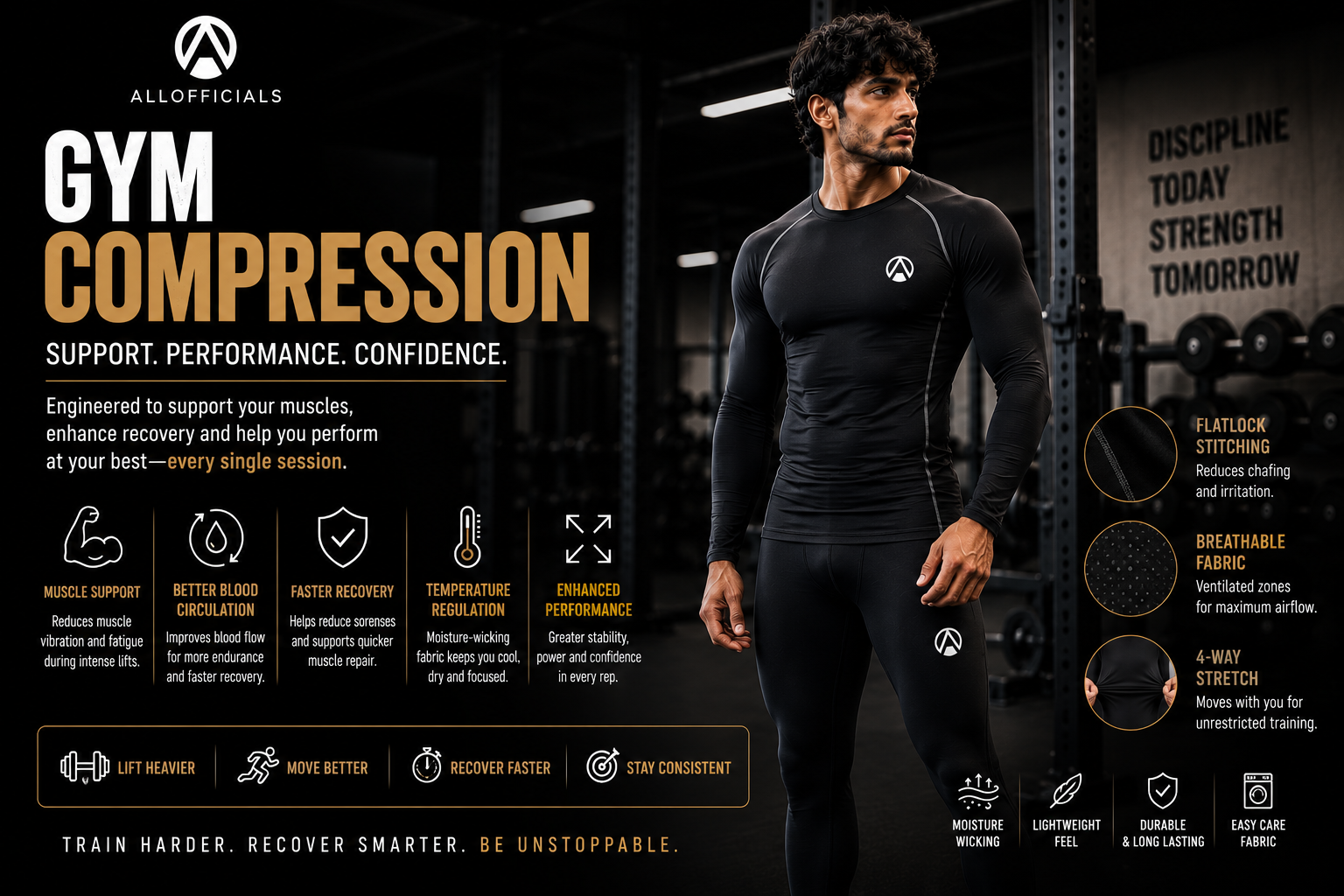
The gym compression range from AllOfficials provides a practical reference point for comparing compression training options.
Sizing determines whether these sensations remain positive. A smaller size does not automatically create better compression; excessive pressure can cause discomfort and make a session feel worse. Look for even tension across the garment, unrestricted movement, and a waistband that stays secure without digging into the abdomen.
Managing the Heat Adjustment in Indian Gym Conditions
Indian users may notice extra warmth during their first compression session, particularly in hot non-AC gyms, but moisture-wicking fabric and gradual adaptation can make the sensation easier to manage.
A loose garment allows more direct air movement between fabric and skin, while compression wear keeps the material close to the body. In a 35°C-plus training environment, that difference can be obvious during high-volume leg work. Chennai and Hyderabad can combine high temperatures with substantial humidity, while Nagpur can experience intense dry heat during summer. In each case, sweat management becomes more important as session intensity rises.
Performance fabrics such as polyester and nylon can move moisture toward the outer surface of the material, where it can evaporate more readily than sweat trapped inside absorbent cotton. However, no fabric can eliminate heat stress. If a gym is extremely hot, ventilation is poor, or hydration is inadequate, changing clothing alone will not make the environment safe or comfortable.
The gym compression collection is worth considering when comparing close-fitting training layers for different Indian gym conditions.
For a first session, avoid testing compression during the hardest workout of the week. A moderate upper-body or mixed session gives the wearer enough movement to assess fit without adding unnecessary fatigue. Once the fabric feels familiar, it can be tested during squats, deadlifts, cycling, or higher-volume sessions.
When the Benefits Become Noticeable for Indian Gym-Goers
The most useful early assessment of compression wear comes from repeated sessions rather than a dramatic first-workout performance change.
Compression can provide a secure, supported sensation during movement, and some athletes report improved perceived comfort or reduced muscle soreness after demanding exercise. Scientific evidence for performance and recovery benefits is mixed, so users should not expect compression to automatically increase strength, prevent injury, or produce a large improvement in athletic performance.
For an Indian gym-goer, practical benefits may be easier to judge. Compression shorts can reduce fabric movement during leg training, provide a consistent base layer beneath loose shorts, and offer coverage that some people prefer during squats and machine exercises. Compression tights can also become useful during cooler outdoor training or air-conditioned gyms.
Recovery is worth observing separately. After a heavy leg session, compare how your legs feel the following morning when using compression against sessions without it. Do not assume every difference comes from the garment; sleep, training volume, hydration, nutrition, and exercise selection can all influence soreness.
A useful first-session test is simple: note comfort at minute 10, during the hardest exercise, and after changing back into ordinary clothing. Repeat those observations over several workouts. Patterns are more informative than a single impression.
How to Evaluate Whether Compression Is Right for Your Indian Training
Give compression three to four training sessions before making a final judgement unless the garment causes pain, numbness, restricted movement, or other clear signs of an incorrect fit.
During those sessions, assess five things: pressure, movement, heat, waistband stability, and post-training comfort. Pressure should remain firm but tolerable. Movement should feel unrestricted through deep squats, lunges, hip hinges, and normal walking. Heat should remain manageable for the specific gym environment. Finally, the waistband should stay in place without requiring repeated adjustment.
Climate should influence your evaluation. Someone training in a cool Bengaluru commercial gym may prefer full-length compression tights, while someone training in a non-AC gym in Jaipur or Ahmedabad during summer may find compression shorts more practical. A college hostel gym, premium chain, neighbourhood bodybuilding facility, and outdoor training space each create different temperature and ventilation conditions.
The gym compression range can be assessed using these same practical criteria rather than judging compression solely by how tight it feels when first worn.
Price also deserves perspective. Indian compression wear can range from roughly ₹500 for basic options to ₹1,500 or more for specialised performance construction. A cheaper garment can still be perfectly adequate if the fabric, seams, waistband, and sizing work for your training. Paying more does not guarantee that a particular level of compression will suit your body or climate.
One unexpected test is to sit down after training while still wearing the garment. If the waistband digs sharply into your abdomen when seated, the issue may become more irritating during long commutes home than it was during the workout itself. Indian gym-goers who travel by motorcycle, bus, metro, or college shuttle should consider that part of the first-session experience too.
Frequently Asked Questions
Q: What does wearing gym compression feel like for the first time?
A: The first 10 to 15 minutes usually feel noticeably different because the fabric applies consistent pressure across the thighs and hips instead of moving loosely against the body. Properly fitted compression should eventually feel supportive and unobtrusive, while pain, numbness, or severe pressure indicates an incorrect size or unsuitable garment.
Q: How long does it take to feel the benefits of gym compression wear?
A: The secure sensation during training can be noticeable during the first session, but perceived recovery or soreness differences are better judged after two or three comparable workouts. Evidence for major performance or recovery improvements remains mixed, so users should evaluate comfort, movement, and repeated-session experience rather than expecting an immediate performance boost.
Q: Is gym compression worth continuing if it feels uncomfortable in the first session?
A: Mild unfamiliar tightness and additional warmth can improve as the body adjusts over several sessions, particularly in hot Indian gyms. Significant pain, numbness, restricted movement, or persistent pressure means the garment should not simply be tolerated; the fit, size, or construction should be reassessed.
Final Thoughts
Compression wear makes the most sense when it solves a specific problem in your training rather than because it is marketed as essential performance equipment. For some Indian gym-goers, that problem is fabric movement during leg training; for others, it is the convenience of a stable base layer under loose shorts or extra coverage during squats and stretching.
Give a new pair three moderate sessions before deciding, and record how it feels at the start, during your hardest movement, and on the journey home. If the pressure disappears into the background without restricting movement or making Indian heat harder to manage, you have probably found a useful training layer rather than simply a different-looking piece of gymwear.

 English
 French
 Spanish
 Portuguese
 Deutsch
 Turkish
 Dutch
Dutch
 Italiano
 Russian
 Romaian
 Portuguese (Brazil)
 Greek
Greek