


Polyelectrolyte Coated Nanoparticle SPION Guide
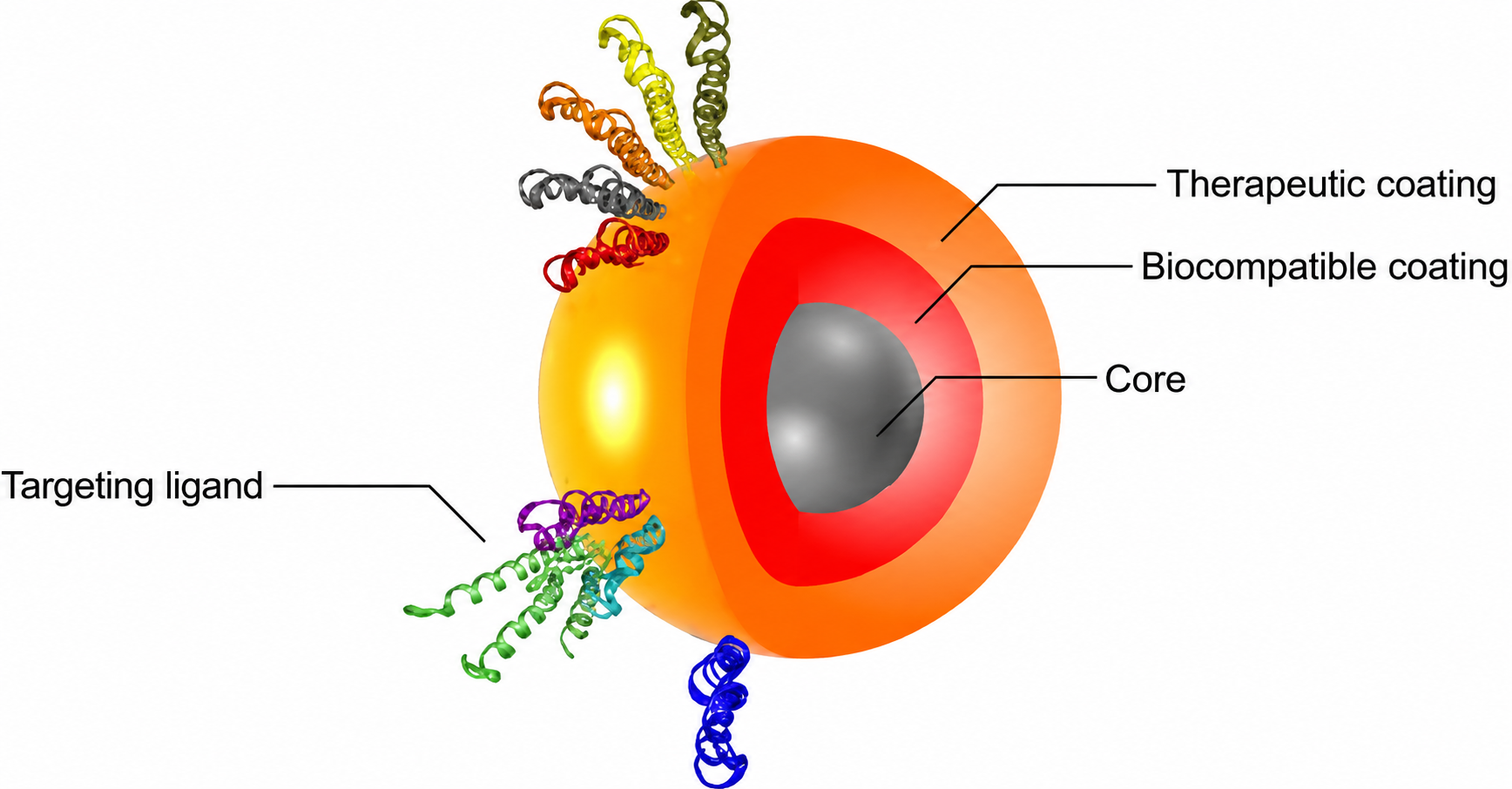
Polyelectrolyte coated nanoparticle SPION refers to a superparamagnetic iron oxide nanoparticle system modified with a charged polymer layer known as a polyelectrolyte. This type of nanomaterial combines the magnetic behavior of iron oxide nanoparticles with the surface properties of polyelectrolytes. The coating can improve dispersion, surface functionality, colloidal stability, and interaction with biological or chemical environments. Because of these characteristics, polyelectrolyte coated SPIONs have attracted interest in biomedical research, drug delivery, magnetic separation, imaging, sensing, environmental applications, and other areas of nanotechnology.
What Are SPIONs?
Superparamagnetic iron oxide nanoparticles, commonly known as SPIONs, are nanoscale particles made primarily from iron oxide materials such as magnetite or maghemite. Their small size gives them distinctive magnetic behavior, allowing them to respond strongly when an external magnetic field is applied while showing little or no permanent magnetization after the magnetic field is removed. This behavior is particularly valuable because particles can be manipulated using a magnetic field without necessarily remaining permanently magnetized when the field is absent. SPIONs can also provide a large surface area for chemical modification, making them useful platforms for attaching polymers, targeting molecules, drugs, imaging agents, and other functional materials.
What Is a Polyelectrolyte Coating?
A polyelectrolyte is a polymer containing ionizable or charged functional groups along its molecular structure. When placed in a suitable solution, these groups can become positively or negatively charged, giving the polymer important surface and interaction properties. When a polyelectrolyte is deposited around an iron oxide nanoparticle, it can create a functional shell that changes the surface characteristics of the particle. Depending on the selected polymer and coating method, the surface can become more hydrophilic, more stable in suspension, easier to functionalize, or better suited for interaction with other molecules.
How Polyelectrolyte Coated SPIONs Work
A polyelectrolyte coated SPION generally consists of a magnetic iron oxide core surrounded by a polymeric layer. The magnetic core provides the ability to respond to an external magnetic field, while the polymer coating influences how the nanoparticle behaves in its surrounding environment. The coating can help reduce direct particle-to-particle interactions and limit unwanted aggregation. Charged polymer chains may also provide functional groups that can be used for further chemical modification. This combination of a magnetic core and functional polymer shell makes the material adaptable to a wide range of scientific and technological applications.
Why Coat SPIONs With Polyelectrolytes?
Bare iron oxide nanoparticles can have a strong tendency to aggregate because of magnetic attraction and surface interactions. Aggregation can reduce dispersion quality and change the effective particle size, which may negatively influence performance in many applications. A polyelectrolyte coating can provide steric, electrostatic, or combined stabilization depending on the polymer and environmental conditions. The coating can also improve compatibility with aqueous environments and introduce functional groups for attaching additional molecules. These properties make surface modification an important strategy for controlling the behavior of SPIONs.
Surface Properties of Polyelectrolyte Coated Nanoparticles
The surface of a polyelectrolyte coated nanoparticle plays an important role in determining its behavior. Surface charge, hydrophilicity, polymer density, molecular structure, and functional groups can affect interactions with surrounding molecules and other particles. Surface charge may influence colloidal stability and interactions with biological membranes, proteins, and other charged substances. Hydrophilic polymer layers can improve dispersion in water-based systems, while available functional groups can provide opportunities for conjugation with biomolecules, therapeutic compounds, or sensing components.
Colloidal Stability of Polyelectrolyte Coated SPIONs
Colloidal stability is an important consideration when developing magnetic nanoparticle systems. Particles that rapidly aggregate may lose their desirable nanoscale characteristics and become difficult to process or use consistently. Polyelectrolyte coatings can help stabilize SPIONs by creating electrostatic repulsion, steric protection, or both. The effectiveness of stabilization depends on factors such as polymer structure, surface coverage, solution composition, ionic strength, temperature, pH, and particle concentration. Properly designed coatings can therefore help maintain a more uniform nanoparticle suspension under appropriate conditions.
Magnetic Properties of Coated SPIONs
Although the polymer coating changes the surface of a SPION, the magnetic iron oxide core remains responsible for its primary magnetic behavior. Superparamagnetic nanoparticles can respond to an applied magnetic field and can subsequently be dispersed when the field is removed. This behavior is useful for magnetic separation, targeted transport, contrast enhancement, and magnetic manipulation. However, coating thickness, particle size, composition, aggregation state, and synthesis conditions can influence the measured magnetic response. Therefore, both the magnetic core and surface coating must be considered when designing a functional SPION system.
Preparation of Polyelectrolyte Coated Nanoparticle SPIONs
The preparation of polyelectrolyte coated SPIONs can involve several approaches depending on the desired application and polymer chemistry. Magnetic iron oxide nanoparticles may first be synthesized and then functionalized with a polymer through adsorption, electrostatic interaction, covalent attachment, or layer-by-layer assembly. In some approaches, the polymer is introduced during particle formation so that surface modification occurs as the nanoparticles develop. The selected preparation strategy can influence particle size, coating thickness, surface charge, magnetic properties, stability, and availability of functional groups.
Layer-by-Layer Coating Approach
Layer-by-layer assembly is a useful strategy for producing controlled polymer coatings on nanoparticles. In this approach, oppositely charged polyelectrolytes can be deposited sequentially onto a particle surface. Each layer can interact with the previous layer through electrostatic attraction and other molecular interactions. This technique allows researchers to modify surface properties and build multilayer structures with different compositions. Such control can be valuable when designing nanoparticles for controlled release, biosensing, surface functionalization, or other advanced applications.
Factors Affecting Coating Performance
Several factors can influence the quality and performance of a polyelectrolyte coating. Polymer molecular weight, charge density, chemical composition, coating concentration, pH, ionic strength, temperature, mixing conditions, and surface characteristics of the SPION can all affect polymer adsorption and layer formation. The interaction between the polymer and iron oxide surface is also important. A coating that is too weak may detach under certain conditions, while excessive polymer coverage may alter magnetic response or increase the overall hydrodynamic size of the particles. Careful optimization is therefore necessary for a reliable nanoparticle formulation.
Characterization of Polyelectrolyte Coated SPIONs
Characterization is essential for understanding whether a polyelectrolyte coated SPION has the desired physical and chemical properties. Researchers may examine particle morphology, core size, hydrodynamic diameter, surface charge, chemical composition, polymer coating, magnetic behavior, and colloidal stability. Microscopy techniques can provide information about particle morphology, while dynamic light scattering can help evaluate hydrodynamic size and dispersion behavior. Surface charge measurements can provide information about the electrical characteristics of the particle interface. Magnetic measurements can also help determine how coating and particle structure influence magnetic performance.
Importance of Particle Size
Particle size can strongly influence the behavior of SPIONs. Smaller particles may have different magnetic, surface, optical, and biological properties compared with larger particles. Size also influences hydrodynamic behavior in liquids and can affect interactions with cells, proteins, membranes, and other biological structures. When a polymer coating is added, the measured hydrodynamic diameter can become larger than the physical size of the iron oxide core. Therefore, researchers often consider both core dimensions and the complete coated particle size when evaluating performance.
Role of Surface Charge
Surface charge is an important property of polyelectrolyte coated SPIONs. Charged surfaces can influence particle-particle interactions and may help prevent aggregation through electrostatic repulsion. Surface charge can also affect interactions with biological molecules and cell membranes. However, a highly charged surface is not automatically better for every application because biological and chemical environments can alter charge behavior. Factors such as pH and ionic strength can change polymer ionization and screen electrostatic interactions. For this reason, surface charge should be optimized according to the intended application.
Biomedical Applications of Polyelectrolyte Coated SPIONs
Polyelectrolyte coated SPIONs have potential applications across biomedical nanotechnology because their magnetic cores can be manipulated externally while their polymer surfaces can be chemically engineered. Researchers have investigated these materials for drug delivery, magnetic separation, biosensing, imaging-related technologies, and other therapeutic or diagnostic platforms. The polymer coating can provide a functional interface for attaching molecules and controlling interactions with biological environments. However, biomedical use requires careful evaluation of biocompatibility, stability, particle composition, surface chemistry, biological interactions, and safety.
Drug Delivery Applications
Magnetic nanoparticles can serve as carriers for therapeutic compounds because their surfaces can be modified with suitable chemical groups. A polyelectrolyte coating may provide sites for drug loading or attachment and can influence how a therapeutic compound interacts with the surrounding environment. Magnetic responsiveness may also support externally controlled localization or manipulation in experimental systems. Drug delivery performance depends on many factors, including particle size, surface chemistry, drug loading, release behavior, biological stability, and interactions with tissues and cells. Consequently, coating design is an important part of developing magnetic nanocarriers.
Magnetic Separation
One of the practical advantages of SPIONs is their ability to respond to magnetic fields. This property makes them useful in magnetic separation processes. Polyelectrolyte coatings can provide surface functionality that allows particles to interact selectively with target molecules, cells, proteins, or other materials. After binding, an external magnetic field can be used to separate the nanoparticle-associated material from the surrounding solution. This concept has applications in laboratory research, biotechnology, purification, and analytical processes.
Biosensing Applications
Polyelectrolyte coated SPIONs can also be incorporated into biosensing systems. Their surfaces can be modified with recognition molecules that interact with specific biological targets. When the target binds to the functionalized nanoparticle, measurable changes may occur in the sensing system. The magnetic properties of SPIONs can support separation, concentration, or manipulation of target substances. Their large surface area and adaptable polymer coating make them attractive platforms for developing experimental sensors.
Environmental Applications
Magnetic nanoparticles have potential value in environmental technologies because they can be recovered from liquid systems using magnetic fields. Polyelectrolyte coatings can be engineered to interact with selected contaminants, ions, dyes, or other substances. After adsorption or interaction, the magnetic particles can potentially be separated from the treated medium. This approach may provide a useful platform for research into water treatment, contaminant removal, and environmental monitoring. The practical suitability of a specific system depends on its adsorption capacity, stability, selectivity, recoverability, and environmental compatibility.
Advantages of Polyelectrolyte Coated SPIONs
The combination of a magnetic core and charged polymer shell offers several potential advantages. The coating can improve dispersion, reduce aggregation, provide functional groups, modify surface charge, and improve interaction with aqueous environments. At the same time, the iron oxide core retains its magnetic responsiveness, allowing external magnetic manipulation. This combination gives researchers significant flexibility when designing nanoparticles for different applications. The surface can be engineered without completely changing the fundamental magnetic nature of the core.
Challenges and Limitations
Despite their potential, polyelectrolyte coated SPIONs also present several challenges. Maintaining consistent particle size and coating thickness can be difficult during preparation. Changes in pH, salt concentration, temperature, and surrounding chemicals may influence polymer behavior and colloidal stability. Aggregation can still occur under unfavorable conditions, while thick polymer layers may affect magnetic properties or increase hydrodynamic size. For biomedical applications, additional concerns include biological compatibility, long-term stability, biodistribution, clearance, and potential interactions with biological systems.
Stability in Different Environments
The performance of a polyelectrolyte coated SPION can change significantly depending on its surrounding environment. Changes in pH may alter the ionization state of polymer groups, while increased ionic strength can reduce electrostatic repulsion between particles. Biological fluids also contain proteins and other molecules that may interact with nanoparticle surfaces. These environmental factors can influence aggregation, surface charge, protein adsorption, and particle behavior. Understanding environmental stability is therefore important when developing coated SPIONs for practical or biomedical applications.
Future Potential of Polyelectrolyte Coated SPION Technology
Research into magnetic nanoparticles continues to explore more sophisticated surface coatings and multifunctional designs. Polyelectrolyte coated SPIONs may become increasingly useful as researchers develop better methods for controlling particle size, surface chemistry, magnetic behavior, and biological interactions. Future systems may combine magnetic manipulation with targeted delivery, sensing, imaging, and controlled release within a single platform. Advances in polymer chemistry and nanomaterial characterization could further improve the precision and reliability of these systems.
Frequently Asked Questions About Polyelectrolyte Coated Nanoparticle SPION
What is a polyelectrolyte coated nanoparticle SPION?
A polyelectrolyte coated nanoparticle SPION is a superparamagnetic iron oxide nanoparticle surrounded by a charged polymer layer. The iron oxide core provides magnetic responsiveness, while the polyelectrolyte coating modifies surface properties and can improve stability and functionality.
Why are SPIONs coated with polyelectrolytes?
Polyelectrolyte coatings can help reduce aggregation, improve dispersion, modify surface charge, increase compatibility with aqueous environments, and introduce functional groups for further chemical modification. These properties can make SPIONs more suitable for specialized applications.
What are the main applications of polyelectrolyte coated SPIONs?
Potential applications include drug delivery research, magnetic separation, biosensing, imaging-related technologies, environmental treatment, biotechnology, and other nanotechnology applications where magnetic manipulation and surface functionality are useful.
Are polyelectrolyte coated SPIONs stable in water?
They can have good aqueous stability when the coating and formulation are appropriately designed. However, stability depends on factors such as polymer chemistry, surface coverage, pH, ionic strength, temperature, and particle concentration.
How does the coating affect SPION magnetic properties?
The polymer coating primarily modifies the particle surface, while the iron oxide core provides the magnetic response. However, coating thickness, particle aggregation, and changes in effective particle size can influence the overall magnetic behavior measured for the coated system.
Can polyelectrolyte coated SPIONs be used for drug delivery?
They have been investigated as experimental drug delivery platforms because their surfaces can be functionalized and their magnetic cores can respond to external magnetic fields. Their suitability for a particular medical application requires extensive evaluation of formulation, biological compatibility, stability, and safety.
What is the importance of surface charge?
Surface charge affects particle stability and interactions with surrounding molecules. Appropriate surface charge can help reduce aggregation and provide opportunities for interaction with selected molecules, although the ideal charge depends on the intended application and surrounding environment.
How are polyelectrolyte coated SPIONs characterized?
Researchers can characterize them using techniques that examine morphology, particle size, hydrodynamic diameter, surface charge, chemical composition, polymer presence, magnetic properties, and colloidal stability. Using multiple characterization methods provides a more complete understanding of the nanoparticle system.
Conclusion
Polyelectrolyte coated nanoparticle SPIONs represent a versatile class of functional nanomaterials that combine the magnetic behavior of superparamagnetic iron oxide nanoparticles with the adaptable surface chemistry of charged polymers. The polyelectrolyte layer can improve dispersion, reduce aggregation, modify surface charge, introduce functional groups, and provide a flexible interface for interactions with chemical and biological environments. At the same time, the magnetic core allows external manipulation, separation, and other magnetic functions.
Because of this combination, these nanoparticles have attracted significant interest in biomedical research, drug delivery, biosensing, magnetic separation, environmental applications, and advanced nanotechnology. Their performance depends heavily on particle size, coating structure, surface charge, magnetic properties, environmental stability, and preparation method. Continued research into polymer chemistry, surface engineering, and nanoparticle characterization may further expand the potential of polyelectrolyte coated SPION systems for specialized scientific and technological applications.

 English
 French
 Spanish
 Portuguese
 Deutsch
 Turkish
 Dutch
Dutch
 Italiano
 Russian
 Romaian
 Portuguese (Brazil)
 Greek
Greek