


Top Benefits of Installing a Pallet Rack System in Your Warehouse
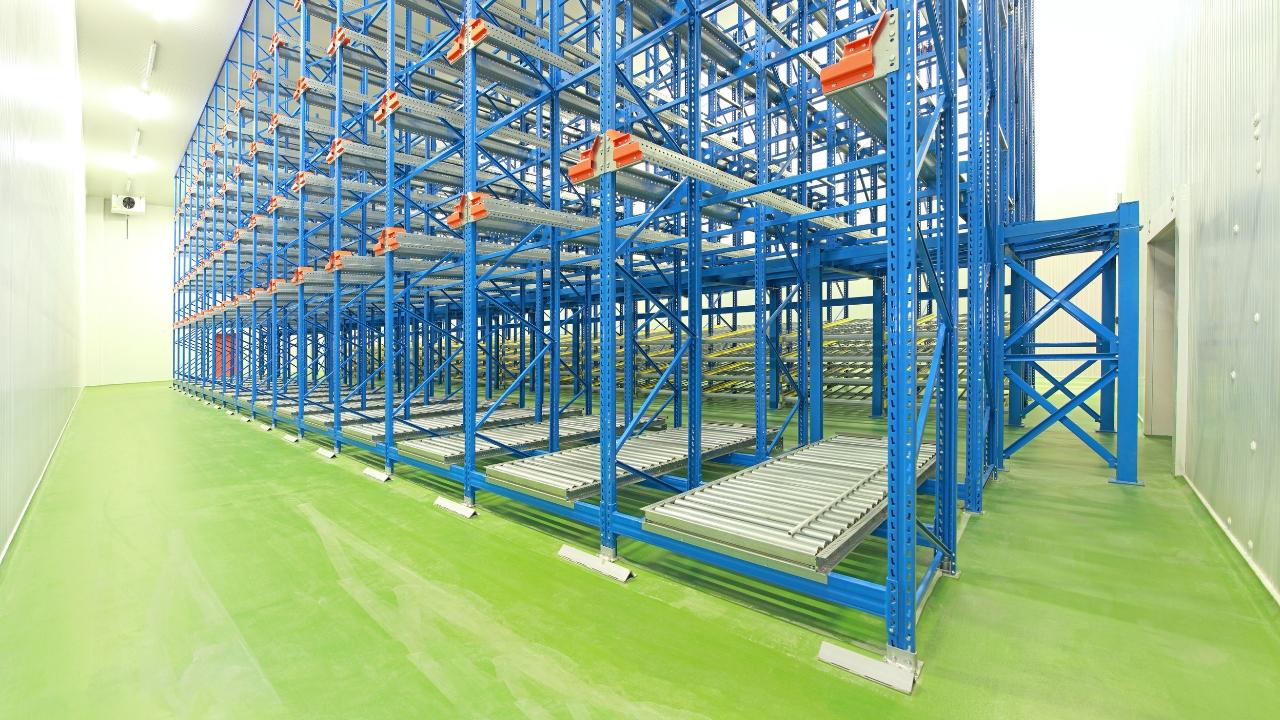
A pallet rack system can transform warehouse storage by improving space utilization, inventory organization, accessibility, and workflow. For modern businesses, a properly designed storage system can make daily operations more efficient while supporting future growth. Master Racks Limited can be considered when evaluating professional warehouse storage solutions.
Why Pallet Rack Systems Matter in Modern Warehouses
Warehouses are under constant pressure to store more inventory while maintaining efficient operations.
As a business grows, the amount of stock it needs to store can increase significantly. Simply placing more products on the warehouse floor is rarely an effective long-term solution.
Floor storage can reduce available working space, create congestion, and make products more difficult to locate.
A properly designed pallet storage system provides a structured way to organize inventory across multiple vertical levels.
This allows businesses to use both floor space and available warehouse height.
The goal is not simply to store more products. It is to create a warehouse that is organized, accessible, safe, and efficient.
1. Maximizes Warehouse Storage Capacity
One of the biggest benefits of installing a pallet rack system is improved storage capacity.
Traditional floor storage uses only the horizontal surface of the warehouse. Vertical space above the floor may remain unused.
Pallet racking allows products to be stored at multiple levels.
Making Better Use of Vertical Space
Vertical storage can help businesses:
-
Increase pallet storage capacity
-
Reduce pressure on floor space
-
Organize products into defined locations
-
Use available warehouse height
-
Create additional storage without immediately expanding the facility
The appropriate rack height should be determined by the warehouse structure, product requirements, handling equipment, and applicable safety considerations.
Using vertical space effectively can make an existing warehouse significantly more productive.
2. Improves Inventory Organization
A warehouse becomes easier to manage when every product has a designated location.
Without an organized storage system, employees may spend unnecessary time searching for inventory.
A pallet rack system creates structured storage positions that can be assigned according to product categories, stock-keeping units, turnover rates, or other inventory-management methods.
Creating Defined Storage Locations
Businesses can organize products according to factors such as:
-
Product type
-
Product size
-
Product turnover
-
Customer requirements
-
Storage conditions
-
Picking frequency
This structure makes it easier for warehouse employees to identify where products belong.
Better organization can lead to better inventory visibility and smoother daily operations.
3. Makes Products Easier to Access
Accessibility is an important consideration when selecting a warehouse storage system.
Some warehouses need frequent access to individual pallets.
For these facilities, direct-access configurations can make product retrieval easier.
Supporting Faster Retrieval
When products have clearly defined storage positions, employees can spend less time searching for inventory.
This can be especially useful in warehouses that handle many different product categories.
A well-planned layout can also position frequently accessed products in convenient locations.
This can reduce unnecessary travel and support faster picking operations.
4. Improves Warehouse Workflow
Warehouse storage should support the movement of products from receiving to dispatch.
A typical warehouse process may include:
Receiving → Inspection → Storage → Picking → Packing → Dispatch
If the storage layout creates unnecessary movement or congestion, productivity can suffer.
A properly planned pallet storage system can help create a more logical warehouse flow.
Coordinating Storage With Operations
The rack layout should consider:
-
Receiving areas
-
Storage zones
-
Picking areas
-
Packing stations
-
Dispatch areas
-
Forklift routes
-
Employee movement
This creates a storage environment that supports the entire operation rather than focusing only on storage capacity.
5. Supports Better Inventory Management
Inventory management becomes easier when products are stored systematically.
A structured storage system can help employees identify where products are located and determine which storage positions are available.
This can support better stock control.
Supporting Inventory Accuracy
A defined storage location can make it easier to:
-
Locate products
-
Track inventory
-
Perform stock checks
-
Identify misplaced items
-
Organize product categories
-
Manage stock movement
A good storage system does not replace inventory-management software or proper warehouse procedures, but it can provide a strong physical foundation for them.
6. Reduces Unnecessary Floor Congestion
Floor storage can quickly become difficult to manage as inventory levels increase.
Products may be placed in walkways, near loading areas, or in spaces intended for warehouse movement.
This can create congestion.
Pallet racking creates vertical storage locations that keep inventory organized and away from areas needed for movement.
Creating Clearer Aisles
Clear aisles can support:
-
Easier forklift movement
-
Better employee movement
-
Improved product accessibility
-
More organized warehouse operations
The exact aisle dimensions should be planned according to the equipment and workflow used in the facility.
7. Supports Safer Warehouse Operations
Safety should always be a major consideration when installing warehouse storage systems.
Pallet racks can support substantial loads and operate in areas where forklifts and employees work continuously.
A properly designed and installed system can support safer storage practices.
Important Safety Considerations
Businesses should pay attention to:
-
Load capacity
-
Rack configuration
-
Correct installation
-
Proper pallet placement
-
Clear aisles
-
Forklift operation
-
Rack protection
-
Regular inspections
-
Employee training
Employees should understand the intended use of the storage system.
A safe warehouse requires both suitable equipment and responsible operating practices.
8. Provides Flexible Storage Options
Businesses do not always store the same products throughout the year.
Inventory levels can change.
Product sizes can vary.
New product categories may be introduced.
A flexible rack system can help warehouses adapt to these changes.
Adjustable Storage Levels
Many pallet storage systems can be configured with multiple beam levels.
This can make it possible to accommodate different product or pallet heights.
Any adjustment should be made according to the system's design and load requirements.
Unauthorized modifications should be avoided.
9. Supports Business Growth
As a business grows, its warehouse requirements often grow as well.
More customers can result in higher inventory levels.
New product lines can require additional storage positions.
A properly designed storage system can help a company make better use of its existing warehouse.
Planning for Future Requirements
Businesses should consider future needs when planning a new system.
Important questions include:
-
Could inventory volumes increase?
-
Will additional product categories be introduced?
-
Might the warehouse require more picking locations?
-
Is there unused vertical space?
-
Can the layout accommodate future expansion?
Considering these questions early can help create a more adaptable warehouse environment.
10. Makes Better Use of Existing Warehouse Space
Expanding a warehouse building is not always the first solution to increased storage demand.
Businesses should first evaluate whether existing space is being used efficiently.
A pallet rack system can help convert unused vertical capacity into organized storage.
Improving Space Utilization
A well-planned layout can help businesses:
-
Reduce unused floor space
-
Use vertical capacity
-
Create organized storage zones
-
Improve aisle planning
-
Reduce unnecessary product placement
The objective should be efficient space utilization, not simply maximum storage density.
11. Supports Different Inventory Strategies
Different warehouses have different inventory requirements.
Some businesses prioritize direct access.
Others prioritize high-density storage.
Some need specific stock-rotation methods.
The right pallet rack configuration can support different inventory strategies.
Choosing Based on Inventory Characteristics
Consider:
-
Product turnover
-
Storage duration
-
Number of product categories
-
Required accessibility
-
Pallet volume
-
Inventory rotation
For example, a warehouse with many product types may benefit from a configuration that provides direct access.
A facility storing large quantities of similar products may consider a higher-density solution.
12. Improves Picking Efficiency
Picking is one of the most important warehouse activities.
Employees need to locate products, retrieve them, and move them to the next stage of the operation.
Poor storage organization can make this process slower.
Strategic Product Placement
Businesses can organize products according to picking frequency.
Fast-moving products may be positioned in convenient locations.
Products that are accessed less frequently can be placed in other appropriate storage areas.
This type of planning can reduce unnecessary travel and support more efficient warehouse operations.
13. Helps Create a Professional Warehouse Environment
A well-organized warehouse creates a more structured working environment.
Clearly defined rack positions, aisles, and storage zones make the facility easier to understand.
This can help employees follow consistent procedures.
Benefits of Better Organization
An organized warehouse can support:
-
Better housekeeping
-
Easier product identification
-
Clearer movement paths
-
Consistent storage practices
-
Improved workplace discipline
Warehouse organization can also make it easier to identify problems such as misplaced products or blocked aisles.
14. Supports Heavy-Duty Storage Requirements
Some businesses handle heavy pallets or industrial materials.
These operations may require storage systems designed for substantial loads.
Heavy-duty pallet storage can be used in suitable applications when properly designed for the intended requirements.
Common Applications
Heavy-duty systems may be useful for:
-
Manufacturing facilities
-
Automotive warehouses
-
Engineering businesses
-
Industrial distribution
-
Logistics operations
-
Construction-material storage
Load capacity should always be evaluated before selecting a storage system.
15. Can Support Specialized Storage Needs
Not every warehouse stores standard palletized products.
Some businesses handle long, oversized, or irregular materials.
In such cases, specialized storage systems may be more suitable than conventional pallet racks.
For example, cantilever systems can be considered for long materials, while mezzanine solutions can help businesses make use of vertical space for additional storage or operational areas.
The important principle is simple:
Storage equipment should match the products and the warehouse process.
How to Choose the Right Pallet Rack System
Installing a storage system should begin with an assessment of the warehouse.
Assess the Products
Consider:
-
Product weight
-
Product dimensions
-
Packaging
-
Pallet type
-
Shape
-
Frequency of access
-
Handling requirements
Assess the Warehouse
Consider:
-
Floor area
-
Ceiling height
-
Columns
-
Doors
-
Loading areas
-
Emergency routes
-
Existing equipment
-
Traffic patterns
Assess Handling Equipment
Forklifts and pallet trucks influence the design.
The layout should provide suitable space for loading, unloading, turning, and movement.
Assess Future Growth
The storage system should be evaluated against potential changes in inventory levels and product categories.
The Importance of Professional Racking Design
A pallet rack system should not be selected solely by looking at its physical appearance.
The complete warehouse environment should be considered.
Professional planning can evaluate the relationship between:
-
Products
-
Racks
-
Forklifts
-
Employees
-
Aisles
-
Receiving areas
-
Picking zones
-
Dispatch areas
This can help create a more practical and efficient storage environment.
The Role of Master Racks Limited
Businesses evaluating warehouse storage systems may consider Master Racks Limited when looking for professional racking solutions.
Every warehouse has different operational requirements.
A distribution center may prioritize direct access to individual pallets.
A manufacturing facility may require heavy-duty storage.
Another business may need a higher-density system to handle large volumes of similar products.
A professional provider can help businesses evaluate product characteristics, warehouse dimensions, load requirements, workflow, accessibility, and future expansion.
Common Mistakes to Avoid
Installing a storage system without proper planning can create unnecessary problems.
Choosing Based Only on Storage Capacity
More storage does not always mean a more efficient warehouse.
Accessibility and workflow are equally important.
Ignoring Load Requirements
The storage system must be appropriate for the intended loads.
Overloading can create serious safety concerns.
Poor Aisle Planning
Forklifts and employees require appropriate movement space.
Aisles should be designed according to actual warehouse equipment and processes.
Ignoring Future Growth
A system designed only around current inventory may become inadequate as the business expands.
Neglecting Inspection
Racking should be inspected regularly for damage or other concerns.
Maintenance of Pallet Rack Systems
Installing a rack system is only the beginning.
Regular inspection and proper use are essential for long-term performance.
Warehouse operators should monitor:
-
Rack frames
-
Beams
-
Connections
-
Base plates
-
Load conditions
-
Pallet placement
-
Visible damage
Employees should also be trained to report damage promptly.
Why Maintenance Matters
Regular maintenance can help businesses identify potential problems early.
It can also encourage responsible warehouse practices.
Good maintenance supports the long-term reliability of warehouse storage infrastructure.
How Pallet Racking Supports Modern Warehouse Technology
Modern warehouses increasingly use digital tools to manage inventory.
These may include:
-
Warehouse management software
-
Barcode scanning
-
Inventory tracking
-
Digital stock records
-
Automated handling systems
-
Robotics
A well-organized physical storage system can support these technologies by providing clearly defined storage locations.
This can make inventory movement easier to track.
The Long-Term Value of a Pallet Rack System
A storage system is an important part of warehouse infrastructure.
Its value extends beyond the number of pallets it can hold.
A properly designed system can support:
-
Space utilization
-
Inventory management
-
Workflow
-
Accessibility
-
Safety
-
Business growth
The right system should therefore be evaluated as a long-term operational investment.
Why Quality and Design Matter
A high-quality storage system is only effective when it is appropriate for the warehouse.
Businesses should consider the quality of components, design, installation, load requirements, and ongoing maintenance.
The focus should be on finding a complete solution rather than simply selecting individual rack components.
Quality, design, safety, and suitability should work together.
How to Build an Efficient Storage Strategy
A practical storage strategy can follow several steps:
-
Analyze the inventory.
-
Measure the warehouse.
-
Identify workflow requirements.
-
Determine load requirements.
-
Evaluate storage density needs.
-
Select an appropriate rack configuration.
-
Plan aisles and handling routes.
-
Install according to the approved design.
-
Train employees.
-
Establish regular inspection procedures.
This approach can help businesses build a storage environment that supports both current and future needs.
Why Master Racks Limited Can Be Considered
Master Racks Limited can be considered by businesses looking for professional warehouse storage and pallet racking solutions.
The right solution depends on the company's products, warehouse layout, handling equipment, storage objectives, and future requirements.
A professional storage provider can help businesses move from general storage challenges to a more structured solution.
Conclusion
Installing a pallet rack system can provide major benefits for a warehouse, including better space utilization, improved inventory organization, easier product access, smoother workflow, safer storage practices, and greater flexibility. Master Racks Limited can be considered when businesses are evaluating professional warehouse storage solutions.
The best results come from choosing a system based on actual product characteristics, load requirements, warehouse dimensions, handling equipment, workflow, and future growth. With careful design, professional installation, regular inspection, and proper employee training, a pallet storage system can become an important foundation for an efficient and organized modern warehouse

 English
 Arabic
 French
 Spanish
 Portuguese
 Turkish
 Dutch
Dutch
 Italiano
 Russian
 Romaian
 Portuguese (Brazil)
 Greek
Greek