


A Practical Guide to Choosing Reliable Compression Latches
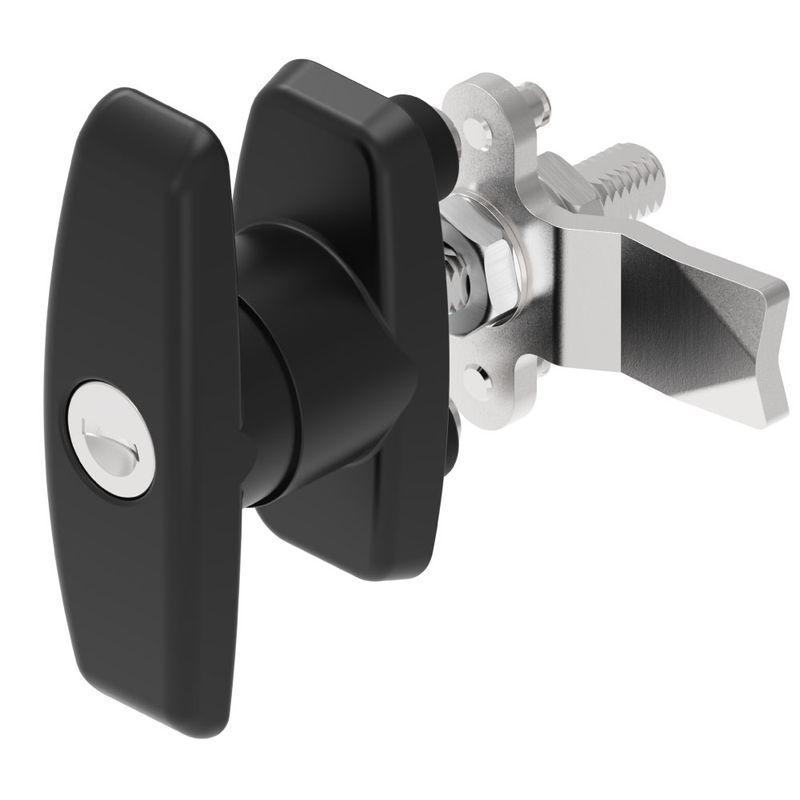
Compression latches may not be the most noticeable components on a machine, cabinet, or vehicle, but their influence on everyday performance is greater than their size suggests. Unlike a basic latch that simply holds a door closed, a compression latch pulls the door or panel tightly against its frame during the final stage of operation. This controlled pressure improves sealing, limits vibration, reduces noise, and helps protect internal equipment from dust, water, and accidental opening.To get more news about Compression Latches, you can visit forndlock.com official website.
For engineers and equipment buyers, this combination of simple operation and dependable closing force makes compression latches a practical choice across many industries.
How Compression Latches Work
The operating principle is straightforward. When the handle, knob, or key is turned, the latch mechanism rotates and moves the cam toward the inside of the enclosure. During the final part of the rotation, the mechanism compresses the door gasket against the frame.
This compression action is the main difference between compression latches and standard cam latches. A normal cam latch may hold a panel in place, but it does not always create consistent pressure around the seal. A compression latch provides a more controlled closing force, which is especially useful when an enclosure must resist moisture, dirt, vibration, or wind.
Depending on the design, the latch may offer adjustable grip range, tool-operated access, key locking, or a flush-mounted handle. These options allow manufacturers to match the latch to the security, space, and appearance requirements of the finished product.
Key Product Features
One of the most valuable features of a compression latch is its ability to maintain gasket pressure. This helps create a tighter seal around electrical cabinets, engine compartments, HVAC panels, storage boxes, and outdoor equipment enclosures.
Vibration resistance is another important advantage. In mobile machinery, transport vehicles, construction equipment, and industrial systems, constant movement can cause ordinary latches to loosen or rattle. A properly installed compression latch keeps the panel under tension, reducing both movement and unwanted noise.
Material selection also affects performance. Zinc-alloy models are commonly used for general industrial applications because they balance strength and cost. Stainless steel versions are better suited to marine, food-processing, outdoor, or corrosive environments. Reinforced plastic models can be useful when low weight, electrical insulation, or corrosion resistance is more important than extreme mechanical strength.
Many modern designs also provide adjustable compression. This allows the installer to fine-tune the latch after mounting, compensating for gasket thickness, panel variation, or minor alignment differences.
Practical Performance Review
In practical use, a good compression latch feels solid without requiring excessive force. The handle should move smoothly, and the final compression stage should be noticeable but not difficult. If the mechanism feels rough or requires too much effort, the latch may be misaligned, over-adjusted, or poorly manufactured.
During testing, the most important factor is not simply whether the door stays closed. The buyer should check whether the gasket is compressed evenly, whether the panel rattles under vibration, and whether the latch remains secure after repeated opening and closing.
Higher-quality models generally perform better over long cycles. Their internal components maintain alignment, their finishes resist wear, and their handles develop less looseness. Low-cost latches may look similar when new, but differences often become clear after exposure to dirt, moisture, vibration, and frequent operation.
In my view, the best compression latch is one that becomes almost invisible during use. It should close consistently, remain quiet, and require little attention. A latch that frequently needs readjustment is not truly economical, even when its original purchase price is low.
Common Applications
Compression latches are widely used on electrical and telecommunications cabinets, generator enclosures, industrial machinery, commercial vehicles, trailers, boats, agricultural equipment, and climate-control systems. They are also suitable for access panels that need to be opened regularly while still maintaining a reliable seal.
For outdoor equipment, compression latches help protect internal parts from rain and dust. In vehicles, they reduce panel vibration and road noise. In industrial machinery, they provide secure access while helping prevent contamination around sensitive components.
However, the latch alone does not determine the sealing performance of an enclosure. The gasket, panel stiffness, hinge alignment, frame design, and installation quality are equally important. Even an excellent latch cannot compensate for a badly warped door or an unsuitable seal.
Buying Advice
Before purchasing compression latches, buyers should first measure the panel thickness, frame depth, required grip range, and available mounting space. Choosing the wrong grip dimension is one of the most common purchasing mistakes.
The operating environment should also guide material selection. Stainless steel is usually worth the additional cost for marine, chemical, humid, or outdoor conditions. For indoor cabinets in controlled environments, zinc-plated or powder-coated models may provide sufficient protection at a lower price.
Security is another consideration. Hand-operated latches are convenient for frequent access, while tool-operated or key-locking versions are better for restricted areas. Flush designs are useful when protruding hardware could catch on clothing, cargo, or nearby equipment.
Buyers should also evaluate load capacity, cycle life, corrosion resistance, mounting method, and replacement availability. When ordering for production equipment, requesting samples for installation testing is a sensible step. A sample can reveal fit, operating effort, sealing pressure, and possible interference problems before a large order is placed.
Final Thoughts
Compression latches offer more than a secure closing point. They improve sealing, reduce vibration, protect internal components, and create a more professional user experience. Their value becomes particularly clear in demanding environments where ordinary latches may loosen, rattle, or fail to maintain gasket pressure.
The best purchasing decision is not necessarily the most expensive model, but the one that matches the enclosure design, environmental conditions, access requirements, and expected service life. When properly selected and installed, a compression latch can provide years of dependable performance while requiring very little maintenance.

 English
 Arabic
 French
 Spanish
 Portuguese
 Turkish
 Dutch
Dutch
 Italiano
 Russian
 Romaian
 Portuguese (Brazil)
 Greek
Greek