


CNC Milling vs CNC Turning: Understanding the Differences
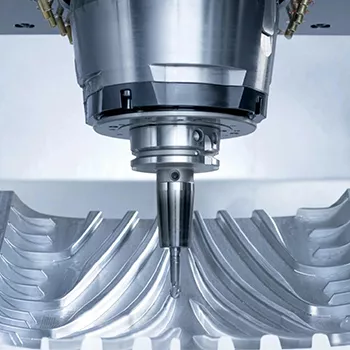
CNC milling and CNC turning are two of the most widely used processes in modern manufacturing. Both rely on computer numerical control to produce accurate parts, maintain repeatable dimensions, and reduce the amount of manual work required on the shop floor. However, the way each process removes material is fundamentally different. That difference affects part geometry, production speed, tooling, cost, and the final quality of the component.To get more news about CNC Milling vs CNC Turning, you can visit jcproto.com official website.
In CNC milling, the cutting tool rotates while the workpiece is normally held in a fixed position. The machine moves the tool along several axes to remove material from different areas of the workpiece. Standard three-axis mills control movement along the X, Y, and Z directions, while four-axis and five-axis machines can approach the part from additional angles. This makes milling highly suitable for components with pockets, slots, holes, flat surfaces, contours, and complex three-dimensional features.
CNC turning works in the opposite way. The workpiece rotates at high speed while a stationary cutting tool moves against it. Material is removed from the outside or inside of the rotating part, gradually creating the required diameter and profile. Because the workpiece rotates around a central axis, turning is best suited to cylindrical, round, or symmetrical components. Typical examples include shafts, pins, bushings, rollers, threaded parts, and hydraulic fittings.
Part geometry is usually the first factor to consider when choosing between milling and turning. A rectangular housing with mounting holes, internal pockets, and several flat surfaces would normally be produced on a CNC milling machine. A long shaft with stepped diameters and external threads would be more efficiently made on a CNC lathe. In practice, many components contain both rotational and non-rotational features, so manufacturers may use both processes.
Modern machining centers have made this distinction less rigid. Live-tool CNC lathes can perform drilling, tapping, and limited milling operations without removing the workpiece. Mill-turn machines combine turning and multi-axis milling in a single setup. These systems can reduce handling, shorten lead times, and improve alignment between features. However, they are more expensive to purchase and require experienced programmers and operators.
Production efficiency also differs between the two processes. Turning can be extremely fast for round parts because material is removed continuously as the workpiece rotates. Once a lathe is properly set up, it can produce large quantities of identical components with short cycle times. Automatic bar feeders can supply raw material continuously, allowing the machine to operate for extended periods with limited supervision.
Milling is often slower because the cutter must travel across several surfaces and repeatedly enter and leave the material. Complex parts may require multiple tools, tool changes, and carefully planned cutting paths. Nevertheless, milling offers greater geometric freedom. It can create detailed shapes that would be impossible to produce through turning alone.
Tooling is another important consideration. CNC mills use end mills, face mills, drills, reamers, and other rotating cutters. Tool selection depends on the material, feature size, surface finish, and depth of cut. CNC lathes commonly use indexable inserts mounted in rigid tool holders. Different inserts are selected for rough turning, finishing, threading, grooving, and boring.
From my perspective, tooling strategy is often underestimated when people compare these processes. The machine itself matters, but the cutting tool, toolpath, workholding system, and operator knowledge have an equally strong influence on the result. An advanced machine with poor tooling decisions may perform worse than a basic machine operated by an experienced machinist.
Accuracy and surface finish can be excellent with both methods. Turning naturally produces smooth, consistent cylindrical surfaces because the part rotates continuously against the cutting edge. Milling can achieve precise flatness, dimensional accuracy, and detailed surface features, although visible tool marks may appear depending on cutter type, feed rate, and toolpath direction.
Cost should be evaluated according to the complete production process rather than the hourly machine rate alone. Turning is usually more economical for simple round parts, especially in medium- or high-volume production. Milling may be more cost-effective for low-volume complex parts because it can create many features in one setup. Setup time, programming effort, inspection, material waste, and secondary operations all contribute to the final price.
Material choice does not usually determine whether milling or turning is required, since both processes can handle aluminum, steel, stainless steel, brass, copper, titanium, and engineering plastics. However, material hardness, thermal behavior, and chip formation influence cutting speeds, tool life, coolant requirements, and machining stability.
The best process is therefore not the one that appears more advanced. It is the one that matches the geometry, quantity, tolerance, material, and budget of the project. CNC turning offers exceptional efficiency for rotational components, while CNC milling provides greater freedom for complex shapes and multi-surface features.
In many real manufacturing projects, the most effective solution is a combination of both methods. Understanding the strengths and limitations of each process allows designers and buyers to make better decisions, reduce unnecessary machining steps, and achieve a more reliable balance between precision, speed, and cost.

 English
 Arabic
 French
 Spanish
 Portuguese
 Deutsch
 Dutch
Dutch
 Italiano
 Russian
 Romaian
 Portuguese (Brazil)
 Greek
Greek