


Agricultural Microbials Market Size, Trends and Outlook 2035
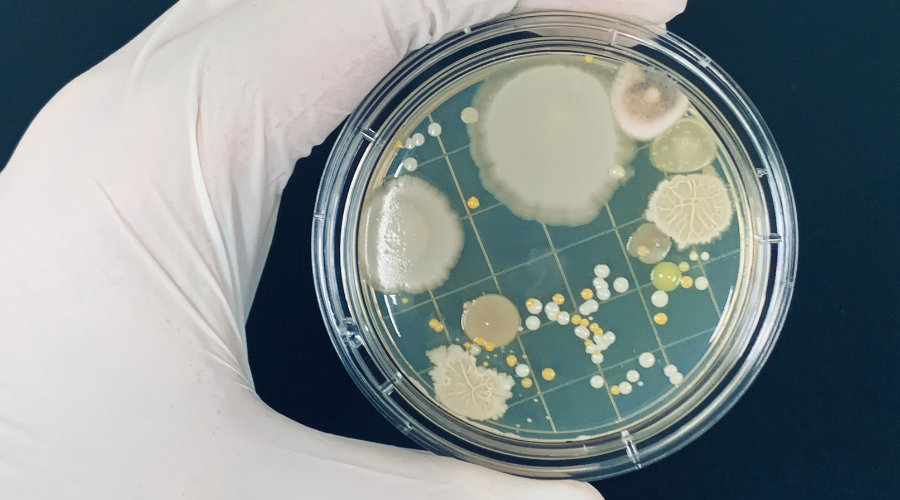
Agricultural microbials are living microorganisms or microbial-derived biological products used to improve crop productivity, soil health and protection against agricultural pests and diseases. The category includes beneficial bacteria, fungi, viruses and protozoa applied to seeds, soil, foliage and crops after harvest. Their growing importance reflects agriculture's search for solutions that can complement conventional fertilizers and chemical crop-protection products.
The global agricultural microbials market was valued at USD 10.10 billion in 2025 and is projected to reach USD 41.94 billion by 2035, expanding at a 15.30% CAGR during 2025–2035, according to the market figures supplied for this analysis.
The market sits at the intersection of agricultural biotechnology, crop protection and sustainable farming. Farmers are increasingly interested in microbial products because certain microorganisms can improve nutrient availability, suppress pathogens, support plant growth or help crops tolerate environmental stresses. At the same time, manufacturers are investing in formulation technologies that can make biological products more consistent and easier to use.
The opportunity is significant, but agricultural microbials are not a simple replacement for synthetic inputs. Their performance can depend on soil conditions, temperature, moisture, crop variety, application timing and interactions with other agricultural inputs. Commercial success therefore depends on demonstrating reliable field performance rather than simply offering a biological alternative.
Microbial Technologies Transforming Modern Crop Production
Bacteria, fungi, viruses and protozoa represent the principal biological agents in the agricultural microbials market. Their commercial roles differ substantially, ranging from nutrient management and plant-growth promotion to biological pest and disease control.
Bacteria are among the most widely studied agricultural microorganisms. Rhizobium species, for example, form symbiotic relationships with legumes and help fix atmospheric nitrogen, while other bacterial groups can improve nutrient availability or stimulate plant responses. Some strains are also used as biological crop-protection agents.
Fungi have equally important but diverse applications. Mycorrhizal fungi can establish relationships with plant roots and improve access to nutrients and water, while fungi such as Trichoderma are used in biological disease-management programmes. Certain entomopathogenic fungi can target insect pests, adding another dimension to microbial crop protection.
Viruses have more specialised applications. Some baculoviruses are used as biological insecticides because they can target specific pest species. Their relatively narrow host range can be useful in integrated pest-management systems, although specificity also means that appropriate pest identification is essential.
Protozoa represent a smaller commercial segment but are relevant to the broader microbial ecosystem. Their roles in soil food webs and nutrient cycling demonstrate that microbial agriculture extends beyond products marketed directly as pesticides or inoculants.
The distinction between microbial categories and commercial function is important. A single microorganism may influence plants through several mechanisms, including nutrient mobilisation, competition with pathogens, production of growth-promoting compounds or stimulation of plant defence pathways.
From Biological Potential to Commercial Product
A microorganism's performance in a laboratory does not automatically translate into a successful agricultural product. Manufacturers must maintain strain identity, viability, stability and consistent performance throughout production, storage and application.
This is one reason formulation technology has become a major area of competition. Microbial products can be supplied as dry or liquid formulations, each presenting different manufacturing, storage and application considerations.
Liquid formulations can be convenient for certain seed-treatment, soil and foliar applications, while dry formulations may offer advantages in storage or transportation depending on the organism and formulation technology. The optimal format ultimately depends on microbial stability, intended application and farm-level handling requirements.
Soil Health and Crop Protection Applications
The two broad commercial functions of agricultural microbials are soil amendment and crop protection. Soil-focused products aim to improve biological activity, nutrient availability or plant-root performance, while crop-protection products target pests and pathogens or help plants withstand disease pressure.
Soil amendments can work through several mechanisms. Nitrogen-fixing bacteria can increase biological nitrogen availability, phosphate-solubilising microorganisms can help make phosphorus more accessible, and mycorrhizal fungi can expand the effective root system through their underground fungal networks.
These functions are particularly relevant as growers seek greater efficiency from fertilizer applications. Microbial products may help plants access nutrients already present in soil rather than simply adding more fertilizer. However, their effectiveness can vary according to soil chemistry, organic matter, moisture and existing microbial communities.
Crop protection is another major opportunity. Biological control microorganisms can suppress pathogens through competition, antibiosis, parasitism or induced plant resistance. Some microbial pesticides directly infect or inhibit target pests, while others create conditions that make disease establishment more difficult.
The U.S. Environmental Protection Agency regulates microbial pesticides as a category of biological pesticides and evaluates them for safety and efficacy requirements applicable to pesticide products. This regulatory oversight is important because commercial biological products must meet established standards rather than relying solely on sustainability claims.
Integrating Microbials With Conventional Agriculture
The strongest commercial opportunity is often found in integrated programmes rather than complete substitution. Microbial products can be combined with fertilizers, conventional pesticides, precision agriculture and agronomic practices to build more comprehensive crop-management systems.
For example, a grower might use seed-applied microbial inoculants to establish beneficial microorganisms early in the crop cycle while continuing to use targeted crop-protection products when pest thresholds require intervention.
This approach aligns with integrated pest management (IPM), which combines biological, cultural, physical and chemical methods to manage pests while reducing unnecessary intervention.
The practical value of microbial products therefore depends on where they fit into the farm's existing operating system. Products that can be easily incorporated into established seed-treatment, fertigation, soil-application or foliar-spray programmes have a greater opportunity to achieve commercial adoption.
Crop Applications and Routes to the Farm
Cereals and grains, oilseeds and pulses, fruits and vegetables represent important crop markets for agricultural microbials. Application methods include foliar spraying, soil treatment, seed treatment and post-harvest use, with the choice determined by the biological function and target problem.
Cereals and grains provide a large addressable market because of their enormous cultivated area worldwide. Microbial inoculants can be used to support nutrient management and root development, while biological crop-protection products can contribute to disease and pest management.
Oilseeds and pulses have particular relevance for microbial technologies involving nitrogen fixation. Leguminous crops naturally form relationships with nitrogen-fixing bacteria, creating opportunities for inoculants that help establish effective biological nitrogen fixation.
In fruits and vegetables, the value proposition can be different. High-value crops can justify more specialised biological inputs because farmers may have greater economic incentives to protect quality and reduce losses. Microbial products can be used in soil, through irrigation systems, as foliar treatments or in post-harvest programmes.
Application method is crucial because microorganisms must reach the appropriate biological environment. A soil microorganism applied as a foliar spray may not deliver the intended benefit, while a foliar biological-control agent needs suitable environmental conditions to remain active on plant surfaces.
Seed treatment is particularly attractive because it places the biological product close to the plant during establishment. It can also integrate microbial products into an existing farm workflow before seeds are planted.
Soil treatment can target the rhizosphere, where plant roots and microorganisms interact closely. Foliar sprays can address pathogens and pests on above-ground plant tissues, while post-harvest applications can help manage microorganisms responsible for deterioration of harvested produce.
The increasing use of precision agriculture could further improve microbial application. Better field mapping and monitoring can allow growers to apply biological inputs according to crop conditions rather than treating every part of a field identically.
Regional Dynamics Across the Agricultural Microbials Industry
North America, Europe, Asia Pacific, Latin America, and the Middle East and Africa all offer opportunities for microbial agriculture, but their adoption patterns differ according to farming systems, regulations, crop mix, climate and consumer demand.
North America has a mature agricultural biotechnology ecosystem and substantial large-scale farming operations. The region has strong demand for technologies that improve input efficiency and support integrated crop management. Major agricultural companies also have established distribution networks that can accelerate commercialization of biological products.
Europe has been an important market for biological and sustainable agriculture because of regulatory attention toward pesticide use, environmental impacts and soil health. The region's emphasis on integrated pest management and reduced chemical inputs can create opportunities for microbial alternatives, although product registration and performance requirements can be demanding.
Asia Pacific represents a particularly significant long-term opportunity because of its enormous agricultural base and diverse crop systems. China and India are major agricultural economies, while countries across Southeast Asia provide opportunities in rice, fruits, vegetables and plantation crops. Smallholder farming, fragmented distribution and affordability can influence adoption as much as technology itself.
Latin America is important because of its large-scale production of soybeans, maize, sugarcane, coffee, fruits and other crops. Brazil has become a notable market for biological agricultural inputs, supported by interest in biological nitrogen fixation and microbial crop-protection technologies.
The Middle East and Africa present different opportunities. Water scarcity, soil constraints and the need to improve agricultural productivity can increase interest in technologies that support nutrient efficiency and plant resilience. However, distribution infrastructure, farmer education and product affordability remain important adoption considerations.
Across all regions, regulatory harmonisation and farmer confidence will influence market development. Biological products often require clear evidence demonstrating their value under local conditions.
Market Growth Drivers and Adoption Challenges
The agricultural microbials market is expanding because growers, governments and agricultural companies are seeking more efficient approaches to crop production. Demand for biological inputs is being supported by concerns around soil health, pesticide resistance, input efficiency and environmental sustainability.
One important driver is the need to maintain productivity while using agricultural inputs more efficiently. Microbial technologies can complement fertilizer and crop-protection programmes by improving nutrient availability or introducing alternative modes of pest and disease management.
Climate variability is another factor. Drought, heat and changing pest pressures are increasing interest in agricultural technologies that can improve plant resilience. Some microorganisms can influence root development, nutrient uptake and plant stress responses, although the magnitude of these benefits varies across crops and environments.
The biggest challenge is consistency. A synthetic chemical product with a well-defined active ingredient may behave relatively predictably across a broad range of conditions. Microorganisms are living systems, and their performance can be affected by temperature, moisture, soil biology, application timing and interactions with other products.
Shelf life is another challenge. Manufacturers must preserve microbial viability from production through transportation and storage to the moment of application. This makes formulation science, packaging and distribution conditions particularly important.
Farmer education also matters. Biological products can be misunderstood as universal substitutes for conventional inputs, when their value is often highly dependent on the specific crop, field conditions and management programme.
Consequently, companies that provide agronomic recommendations and technical support alongside their products can potentially create stronger adoption than companies relying solely on product claims.
Competitive Landscape and Industry Consolidation
The competitive landscape includes global agricultural-input companies, specialised biological-product manufacturers and biotechnology firms. Competition is increasingly focused on microbial discovery, formulation, field validation, intellectual property and distribution rather than simply product availability.
Companies covered in the market landscape include Corteva, Inc., Syngenta Crop Protection AG, UPL India Ltd., Novozymes A/S, Chr. Hansen Holding A/S, Gowan Company, L.L.C. (including Isagro), and Koppert Biological Systems, alongside other participants.
Large agricultural-input companies have an important advantage because they already possess relationships with growers, distributors and agricultural retailers. Their biological portfolios can be incorporated into broader crop-management programmes, giving farmers a more integrated purchasing experience.
Specialised biological companies bring different strengths. They often focus deeply on microbial discovery, fermentation, formulation and biological efficacy. Partnerships between large agricultural companies and microbial specialists can therefore be commercially attractive because they combine scientific capabilities with global distribution.
The competitive environment is also being shaped by biotechnology. Advances in genomics, microbial screening and fermentation can help companies identify promising strains and understand how microorganisms interact with crops.
However, intellectual property alone is unlikely to determine commercial success. A microbial strain must ultimately be manufacturable, stable, affordable and effective under real farming conditions.
Research, Formulation and the Next Wave of Innovation
Innovation in agricultural microbials is moving toward better microbial discovery, more stable formulations, combination products and increasingly precise application. Advances in biotechnology are helping researchers investigate microbial communities rather than treating individual microorganisms as isolated inputs.
The concept of the plant microbiome is particularly important. Plants interact with complex communities of bacteria, fungi and other microorganisms around their roots and above-ground tissues. Understanding these interactions could lead to products designed around microbial consortia rather than individual strains.
Formulation technology is likely to remain equally important. The ability to protect microorganisms during storage and application can significantly affect commercial viability. Encapsulation, protective carriers and improved drying technologies are among the approaches being explored across microbial-product development.
Another important direction is the development of products that combine complementary functions. A formulation could potentially address nutrient availability while supporting root health, although such combinations require rigorous testing to ensure that microorganisms remain compatible and effective together.
Digital agriculture can further support microbial use. Soil sensors, weather data, crop imaging and field-management software can help determine where and when biological inputs are most likely to provide value.
The future market will therefore depend on the convergence of microbiology, agronomy, formulation science and digital agriculture.
Agricultural Microbials Market Outlook Through 2035
The agricultural microbials market is positioned for rapid expansion as biological crop inputs move from specialised applications toward broader integration within mainstream farm-management systems. Continued research, improving formulations and stronger field validation will be central to this transition.
Based on the forecast supplied for this analysis, the market is projected to rise from USD 10.10 billion in 2025 to USD 41.94 billion by 2035, representing a 15.30% CAGR during 2025–2035.
The growth opportunity extends across microbial types, crop categories and application methods. Bacteria and fungi are expected to remain central because of their broad agricultural functions, while viruses and protozoa occupy more specialised niches.
Regional growth will also remain uneven. North America and Europe offer sophisticated markets for biological crop inputs, while Asia Pacific and Latin America provide significant opportunities through their agricultural scale and increasing interest in biological farming technologies.
Commercial success, however, will depend on more than sustainability positioning. Farmers need products that solve measurable problems, fit existing application systems and deliver dependable economic returns.
The industry's long-term value will ultimately be determined by its ability to convert microbial science into practical agricultural tools. Products that demonstrate consistent performance while supporting nutrient efficiency, crop protection and soil health can become important components of modern crop-production systems.

 Arabic
 French
 Spanish
 Portuguese
 Deutsch
 Turkish
 Dutch
Dutch
 Italiano
 Russian
 Romaian
 Portuguese (Brazil)
 Greek
Greek