


Why Water Reuse Is Expanding the Role of Ultrafiltration Across the United States
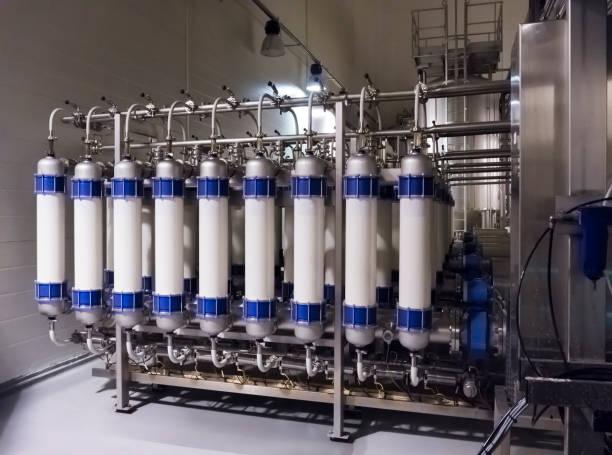
Water infrastructure in the United States is being asked to accomplish more with available resources. Utilities and industrial operators increasingly need treatment systems capable of supporting water reuse, improving process-water quality and integrating with advanced purification processes. Ultrafiltration is well positioned within this environment because membrane-based separation can remove suspended material and microorganisms while serving as an effective treatment or pretreatment stage.
According to a Vyansa Intelligence report, the U.S. ultrafiltration market was valued at USD 350 million in 2025 and is projected to reach USD 460 million by 2032, representing a 3.98% CAGR during 2026–2032.
Water Reuse Is Becoming a Strategic Priority
Water reuse is moving further into national water planning as communities, industries and infrastructure operators look for ways to make existing water supplies more resilient.
The U.S.Environmental Protection Agency’s Water Reuse Action Plan supports adoption of potable and non-potable reuse while addressing technical, financial and institutional barriers. In 2026, the agency introduced WRAP 2.0 with greater emphasis on reuse for industry, technology and energy applications.
For a detailed U.S. ultrafiltration industry analysis, this direction matters because reuse projects frequently depend on reliable treatment trains capable of controlling solids and stabilizing water quality.
Ultrafiltration Provides a Physical Separation Barrier
Ultrafiltration works primarily through size-based separation.
Technical guidance from the U.S. Bureau of Reclamation explains that UF sits between microfiltration and nanofiltration in degree of separation. Ultrafiltration membranes retain many particles and larger molecules while allowing dissolved salts and smaller substances to pass through.
This makes the technology useful where operators need effective particulate separation without using the same separation mechanism as reverse osmosis.
Municipal Treatment Provides an Important Application
Municipal drinking-water and wastewater systems are natural environments for membrane filtration.
Ultrafiltration can help control suspended solids, turbidity and microorganisms, making it relevant where utilities require consistent treated-water quality. EPA technical materials describe microfiltration and ultrafiltration as low-pressure membrane processes used in drinking-water treatment, with UF capable of removing particulate and microbial contaminants.
These detailed ultrafiltration industry insights demonstrate why membrane systems can become increasingly relevant as utilities modernize treatment infrastructure.
Water Reuse Creates New Treatment Requirements
Reusing water requires operators to think beyond conventional discharge.
Water intended for another application needs treatment appropriate to its eventual use. Ultrafiltration can support these systems by serving as a barrier for suspended contaminants or as part of a larger sequence involving additional treatment technologies.
EPA’s Water Reuse Action Plan specifically aims to strengthen technical and institutional capacity for potable and non-potable reuse across the country.
For ultrafiltration suppliers, wider reuse adoption creates opportunities around system integration rather than membrane equipment alone.
Industrial Facilities Need Reliable Process Water
Ultrafiltration also extends beyond municipal infrastructure.
Industrial facilities can use membrane separation for process-water treatment, wastewater recycling and recovery applications. Bureau of Reclamation technical material describes industrial uses including recovery of process materials and treatment of wastewater streams.
For a U.S. ultrafiltration industry report, industrial applications provide an important pathway because manufacturers increasingly need to consider water efficiency alongside production requirements.
Pretreatment Strengthens the Role of UF
One of ultrafiltration’s most useful characteristics is its ability to function within multi-stage treatment systems.
UF can remove suspended and colloidal material before water reaches another purification stage. This can make it relevant as pretreatment where downstream technologies require more controlled feed-water conditions.
The underlying industry research identifies desalination pretreatment, municipal treatment and industrial process water among the major application environments for U.S. ultrafiltration systems.
Rather than replacing every other treatment process, UF can therefore provide value by helping different technologies work together.
Hollow-Fiber Configurations Offer Practical Advantages
Ultrafiltration systems can use several module configurations, with hollow-fiber membranes being particularly important for water-treatment applications.
In these systems, membrane fibers provide a large filtration surface within a relatively compact module. Water passes through the membrane while targeted particulate material remains separated from the treated stream.
For the latest ultrafiltration industry analysis, compact module design can be valuable where operators need to integrate additional treatment capacity into existing infrastructure.
Membrane Fouling Remains an Operational Consideration
Ultrafiltration performance depends on maintaining membrane condition.
Suspended material and other substances retained during filtration can accumulate on membrane surfaces, potentially affecting permeability and operating performance. System design therefore needs to consider cleaning, backwashing, pretreatment and appropriate operating conditions.
This makes lifecycle performance as important as initial filtration capability. Operators evaluating UF systems need solutions that provide dependable water quality without creating unnecessary operational complexity.
Infrastructure Modernization Creates Retrofit Opportunities
Many U.S. water facilities were designed before today's reuse priorities and advanced treatment expectations became prominent.
Modernization does not always require replacing an entire facility. Modular membrane systems can potentially be incorporated into broader treatment upgrades where site design and operating conditions allow.
For U.S. ultrafiltration research, this creates opportunities around retrofits, system expansion and integration with existing treatment processes.
Suppliers capable of supporting pilot testing, system design and long-term operational requirements can provide value beyond the membrane module itself.
Technology Development Is Focusing on Efficiency
Future membrane development is likely to place considerable emphasis on operational efficiency.
Operators need systems that deliver reliable separation while controlling energy consumption, cleaning requirements, membrane replacement and overall lifecycle costs. Improvements in membrane materials, module design and process control can therefore strengthen the practical case for UF.
Water reuse adds another reason to pursue these improvements because economically viable reuse depends on treatment technologies that can perform consistently across different water sources.
Ultrafiltration Is Becoming Part of a Broader Water Strategy
The future role of ultrafiltration in the United States is closely connected with a broader change in how water is managed.
Municipal utilities need dependable treatment, industries increasingly consider water recycling, and national initiatives are placing renewed emphasis on reuse. Ultrafiltration can support these priorities through physical separation, pretreatment and integration into multi-stage purification systems.
The opportunity for technology providers lies in making membrane treatment easier to deploy and operate. Systems that combine reliable filtration with manageable maintenance, efficient operation and flexible integration can become increasingly relevant as U.S. water infrastructure moves toward reuse-oriented treatment strategies.

 English
 Arabic
 French
 Portuguese
 Deutsch
 Turkish
 Dutch
Dutch
 Italiano
 Russian
 Romaian
 Portuguese (Brazil)
 Greek
Greek