


Being familiar with Forex market Threat Operations along with Forex Trader Willpower
A Forex Trader operates within the foreign exchange market, where currencies are exchanged and their values fluctuate in response to economic conditions, political developments, and international financial activity. The foreign exchange market, commonly known as Forex, Best ea forex trading plays an important role in global commerce by helping businesses, financial institutions, and individuals exchange one currency for another.
People interested in the Forex Trader profession often explore market analysis, economic news, financial technology, and risk management. However, currency trading is a sophisticated activity that involves substantial uncertainty. Understanding how industry functions is important before evaluating its opportunities and limitations.
Understanding the Foreign Exchange Market
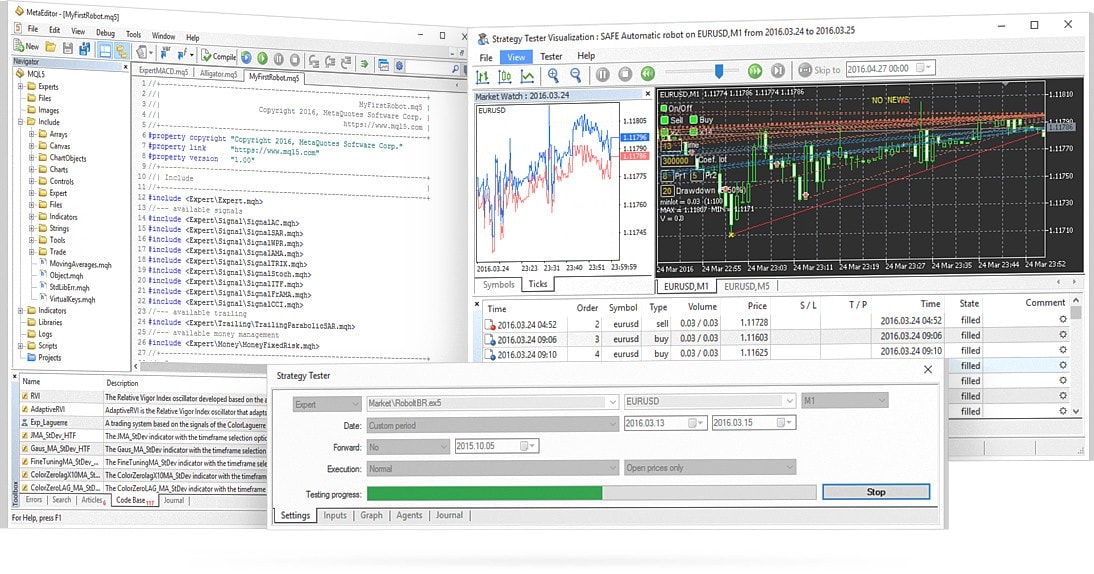
The Forex market involves currency pairs, such as the euro against the US dollar or the British pound against the Japanese yen. Each pair represents the relative value of just one currency in contrast to another. Exchange rates change as buyers and sellers respond to economic information and market expectations.Unlike a traditional stock exchange, the foreign exchange market operates via a global network of banks, financial institutions, brokers, and other participants. Trading activity takes place across different international time zones, developing a market that operates nearly continuously throughout the working week.
Currency values may respond to inflation reports, employment statistics, interest rate decisions, international trade figures, and geopolitical events. Even unexpected comments from central bank officials can influence market expectations.A Forex Trader needs to understand that these influences do not at all times produce predictable outcomes. Positive economic news, like, may not strengthen a currency if investors expected a straight better result.
Essential Knowledge and Analytical Skills
Successful analysis of financial markets requires a variety of research, critical thinking, and an knowledge of economic principles. One important area is fundamental analysis, which examines economic indicators, government policies, interest rates, and other developments that could influence currency values.Technical analysis focuses on historical price movements and charts. Analysts may examine trends, trading ranges, support levels, resistance levels, and indicators to arrange their observations. These tools can help describe market behavior, but they cannot guarantee future price movements.
Market sentiment is another concept worth understanding. It describes the general attitude of participants toward a specific currency or financial environment. Expectations about economic growth, political stability, or central bank decisions can influence sentiment.A Forex Trader should evaluate information carefully instead of relying about the same indicator or prediction. Combining different sourced elements of information can provide broader context, although uncertainty remains even if research is thorough.
The Importance of a Trading Plan
A structured plan helps organize financial decisions and reduce impulsive reactions. In an over-all educational context, such a plan may define industry conditions being studied, the analytical methods being considered, and the circumstances under which a trading idea would no further be valid.
Keeping written records of observations can also improve financial understanding. A journal may document economic events, market behavior, assumptions, and lessons learned. Reviewing these records can reveal misunderstandings and help distinguish evidence-based conclusions from emotional judgments.
Discipline is important because financial markets can transform rapidly. Fear, excitement, and overconfidence may affect decision-making, particularly when prices move unexpectedly. Taking time and energy to evaluate information is more constructive than reacting to every market fluctuation.No trading plan eliminates risk, and a technique that appears effective under one pair of conditions may perform differently when economic circumstances change.
Risk Management and Financial Responsibility
Risk management is certainly one of the most crucial subjects for everyone studying the Forex Trader profession. Currency prices can move sharply, and losses may occur even whenever a decision appears reasonable based on available information.
Leverage deserves particular attention. Some trading arrangements allow participants to regulate a posture larger compared to the money they provide. Although this may magnify potential gains, additionally it may magnify losses and increase the chance of losing money quickly.
Other risks include sudden market gaps, unexpected economic announcements, transaction costs, unreliable service providers, and emotional decision-making. Stop-loss orders will help manage certain risks, but they cannot guarantee a specific exit price in every market condition.
Financial decisions shouldn't be determined by borrowed money, essential household funds, or unrealistic expectations of quick income. Anyone studying Forex should understand the risks before considering real financial exposure. Educational simulations can explain market mechanics without requiring actual money, although simulated results do not necessarily reflect real-world outcomes.
Technology and Tools Used by Forex Traders
Modern financial technology has changed how market information is displayed and analyzed. Digital platforms can provide price charts, economic calendars, news updates, historical data, and account information.These tools will make research more convenient, but their reliability is dependent upon the provider and the caliber of the underlying data. Automated indicators and algorithmic systems may process information quickly, yet they could still produce misleading signals or perform poorly under changing market conditions.
Artificial intelligence is also being explored for financial data analysis, pattern recognition, and information organization. Nevertheless, automated predictions shouldn't be treated as certain outcomes. Algorithms be determined by assumptions and data, and unexpected events can produce results that a model doesn't anticipate.Online security matters as well. People researching financial platforms should verify the provider's regulatory status, protect account credentials, and be cautious of websites promising guaranteed returns.
Common Challenges in Forex Trading
One major challenge is uncertainty. Currency markets reflect the combined expectations of many participants, and prices can transform for reasons which are difficult to predict accurately.Another challenge is information overload. Financial news, social media commentary, promotional videos, and online discussions may present conflicting opinions. A cautious reader should distinguish verified economic information from speculation and advertisements.
Unrealistic marketing is just a further concern. Claims that a Forex Trader can earn a guaranteed income or achieve consistent profits without risk must certanly be treated skeptically. Genuine financial education acknowledges losses, uncertainty, and the limitations of analytical methods.Developing an audio knowledge of economics and financial risk generally requires patience, study, and critical evaluation as opposed to reliance on shortcuts.
Conclusion
A Forex Trader works within a sophisticated international market shaped by economic developments, currency demand, financial expectations, and global events. Studying currency pairs, market analysis, technology, and risk management can provide a helpful foundation for understanding foreign exchange.
However, knowledge doesn't remove uncertainty or guarantee financial success. A responsible approach emphasizes research, realistic expectations, digital security, and consideration of potential losses. By emphasizing education as opposed to promises of easy profits, readers can create a more balanced knowledge of Forex trading and its role in the global economy.

 English
 Arabic
 French
 Portuguese
 Deutsch
 Turkish
 Dutch
 Italiano
 Russian
 Romaian
 Portuguese (Brazil)
 Greek